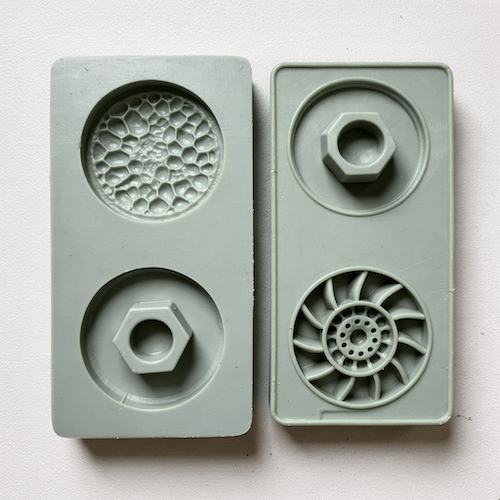
Urethane RTV Rubber
RU-455 (55A Shore)
RU-455 A/B Two-Component, 100% solids Urethane Elastomer RTV (55A) with Fast De-mold Times--1-2 hours. This system provides a firm, semi-flexible, durable and abrasion resistant rubber compound. Use for creating rubber parts and molds, especially molds where dimensional stability is required to avert distortion. Molds are used to cast cement, wax, and plaster parts.
Features:
*Easy to Process
*Rapid Mold Cycle
Typical Physical Properties:
(For Components) Component A Component B
Viscosity (cps): 5000 4000
Mix Ratio, By Weight: 100 100
Color: Yellow/Clear Amber
(For Cured Material)
Shore A Hardness: 55
Tensile Strength (psi): 406
Elongation %: 480
Tear Resistance (psi): 130
Specific Gravity: 1.05
Reactivity Data:
Gel Time: 10 Minutes
De-Mold Time: 1-2 Hours
Preparation of Master:
Urethane elastomers will stick to most surfaces. A proper mold release must be used on all surfaces. SILPAK’s MR-150-50 or ER-2300 is recommended. Wood, plaster, stone, pottery, masonry, or any porous surface must be sealed with lacquer or clear shellac to seal surfaces. Allow 24 hours to dry before preparing master with mold release. Urethane rubber cures to a flexible rubber in above cure times. These products are safe to use as directed, check MSDS for safety information.
Mixing and Curing:
Before adding A to B, urethane B should be stirred or shaken for 1 minute to assure that any separated material is remixed. Select a clean, dry container for mixing. Avoid using wood or paper products, which could cause cure problems. Weigh the proper ratio A to B and mix well. Two containers may be used to assure that all materials are well mixed.
Pour mixture over master slowly allowing material to fill void and push air out of cavity. A vacuum chamber can be used to remove excess air bubbles before pouring. After mixture is poured a light mist of ER-2300 can be sprayed on top of the surface to break tension bubbles. Urethane RTV will cure to solid rubber at above cure time. Urethane rubber that is colder than 75°F will cure slower. During colder weather material may be heated in a hot water bath (place container in plastic bags first) and the master model should be warmed. Accelerated cures can be reached by heating the mold and material at 100-150°f for pre-determined time. Cold weather or off-ratio material can result in unacceptable rubber results.
Brush-On Mold: RU-435TH System Available
A material with low sag may be obtained by mixing a powder- PE Mini Fibers. Various ratios of 5% to 10% can be used to achieve different thickness and flow control. A mold can be made with only four coats applied within an hour, which can be brushed or troweled onto surface. A mold release should be used to separate the mother mold from rubber mold.
Casting RTV:
Mold release is required when using Urethane RTV as a casting material because of their innate adhesive properties. For epoxy, polyester, and properly dried and sealed plaster molds use release agent-- ER-2300 or MR 150 before each casting. If using Silicone RTV Rubber molds, Platinum Based Silicone is recommended. Avoid using Tin Based Silicone RTV’s, unless properly processed by baking mold for 4-6 hours @ 150F.
Storage:
Material should be stored in warm, dry area with lids secured tightly. Once containers are opened, material should be used in a short time period. Pre-test any aged material before using.
The information and data contained herein are based on information we believe reliable. Each user of the material should thoroughly test any application and independently conclude satisfactory performance before commercializing. Suggestions of uses should not be taken as inducements to infringe on any particular patent.